5 Healthtech Patent Steps Indian Startups Need Now
Why Your Healthtech Innovation is a Business Asset – And How to Protect It
Healthtech patent India involves navigating a nuanced and complex healthtech patent process, and many Indian startups stumble early due to common misunderstandings. In this guide, we’ll reveal five critical steps—including drafting robust claims, dealing with medical data, and filing best practices—to ensure your patent efforts position your innovation for success.
If you’ve built an AI model that detects lung issues from X-rays or a smartwatch that tracks arrhythmia, you’re not just solving a health problem—you may also own a patentable invention. But most founders in India, caught in the whirlwind of building a product and finding market fit, don’t know how or when to file for a patent. The most common misconception is that a great product is enough to succeed. In the high-stakes world of healthtech, this is a dangerous assumption.
The healthcare technology sector is, by its nature, deeply reliant on intellectual property (IP). The journey from a breakthrough idea to a market-ready product involves massive investment in research and development (R&D), long development cycles, and navigating complex regulatory approvals.
Globally, medtech is one of the most active sectors for patent filings. While India has historically lagged, patent activity is now surging, driven by both multinational corporations and a new wave of innovative Indian startups. This makes the landscape incredibly competitive. Without protection, your novel diagnostic algorithm or custom-designed wearable sensor could be replicated by a competitor, eroding your market share and making it nearly impossible to recoup your initial investment.
For an early-stage healthtech company, a patent is not just a legal certificate to be framed on a wall; it is a powerful strategic asset that delivers tangible business advantages.
Your Healthtech Innovation is an Asset.
If you’ve built an AI that reads X-rays or a wearable that tracks arrhythmia, you may own a patentable invention. This guide helps Indian founders turn ideas into protected, valuable IP.
0
of patents filed by Indian residents in FY2024, a first-time majority.
0
times higher AI patent filings in India from 2021-2025 compared to 2010-2015.
0
times increase in patent grants in FY2024, signaling a faster, more efficient IPO.
The Healthtech Patentability Checklist
This section explains what makes an invention patentable in India. Before filing, every founder must understand the three core requirements and the two major hurdles specific to the healthtech sector.
The 3 Pillars of Patentability
Novelty
Your invention must be new and not previously published or known anywhere in the world before your filing date.
Inventive Step
It must not be “obvious” to a person skilled in your field. It must represent a genuine technical advance.
Industrial Applicability
The invention must be capable of being made or used in an industrial setting. This is usually straightforward for healthtech.
The 2 Healthtech Hurdles
Section 3(i): Medical Treatment
You can’t patent a method of treating or diagnosing a human. The act of a doctor performing a diagnosis is excluded.
✅ The Workaround:
Patent the tool or system used for diagnosis (e.g., the device, kit, or software that provides data to the doctor).
Section 3(k): Software & Algorithms
You can’t patent a standalone algorithm or computer program “per se”. A simple health tracking app is likely excluded.
✅ The Workaround:
Combine software with hardware. Show a clear “technical effect”—how your software makes a device work better, faster, or more efficiently.
The Rules of the Game
Patent law isn’t static. It’s shaped by court rulings and official guidelines. This section breaks down key precedents that every healthtech founder in India must understand to navigate the system effectively. Click on each case to learn more.
Plain-English Summary: The Indian Patent Office’s guidelines state that software is patentable if it’s tied to hardware and produces a clear “technical effect” or “technical contribution.” It can’t just be code; it must cause a tangible, real-world improvement. The latest drafts show the IPO is getting more sophisticated, even asking for details on AI training data if it’s essential to the technical outcome.
View IPO Guidelines →Founder’s Takeaway: This case is a game-changer for diagnostics. The court ruled that a method is only a “diagnostic method” (and thus non-patentable) if it provides a final conclusion on a disease. A method that provides an intermediate data point or biomarker (like a “fetal fraction” from blood) *to* a doctor is a patentable technical process. Frame your patent claims around the novel process of generating a risk score or data point, not making the final diagnosis.
Read Case Summary →Plain-English Summary: This classic Supreme Court case established the enduring test for “inventive step” in India. It asks if an invention would be “obvious” to a person with average skill in the field. For a healthtech founder, this means your innovation can’t be a simple combination of existing technologies (e.g., putting a known sensor on a standard watch). It must represent a non-obvious leap forward that solves a technical problem in a new way.
View Judgment on IndianKanoon →Healthtech Innovation Hotspots
The Indian patent landscape is booming, driven by domestic innovators and deep tech. These charts reveal where investment is flowing and where the next wave of competition will emerge. Hover over the charts to explore the data.
India’s Patent Boom: Residents vs. Non-Residents
For the first time in FY2024, the share of patents filed by Indian residents crossed 55%, a clear sign of a maturing domestic innovation ecosystem.
Hotspots: Healthtech Patent Subdomains
AI in Radiology and Diagnostics are leading the charge, followed by a surge in patenting activity for medical wearables and telemedicine platforms post-pandemic.
From the Trenches: Real Patent Examples
Theory is good, but examples are better. Explore these 10 real-world healthtech patent applications from Indian innovators. Filter by category and click on a card to see how these startups protect their ideas.
The Founder’s IP Playbook
Protecting your IP isn’t just a legal formality; it’s a core business strategy. Follow these actionable steps to build value and secure your future.
File Early, File Provisionally
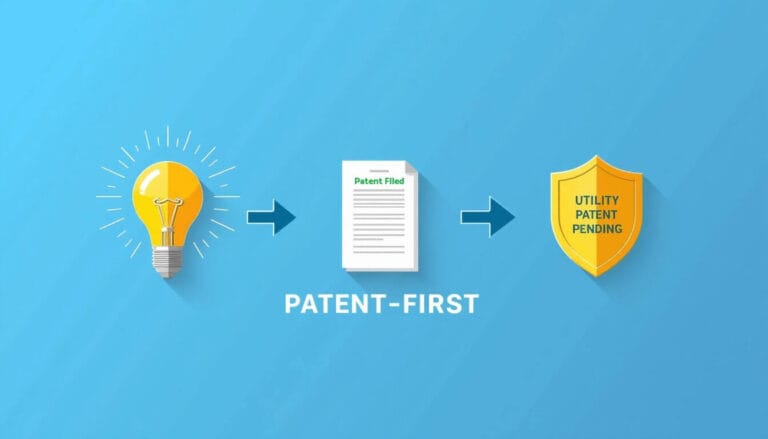
Don’t wait for a perfect product. File a low-cost provisional application as soon as your idea is concrete. This secures your priority date and gives you a 12-month “patent pending” window to develop and fundraise.
Frame Your AI Invention Correctly
Don’t patent the algorithm itself. Frame it as a technical solution to a technical problem. Highlight how it makes a device work better and quantify the improvement (e.g., “reduces processing time by 20%”).
Combine Software + Device
The most defensible patents cover an integrated system. This moves your invention away from the “software per se” exclusion and reframes it as a tangible, patentable apparatus.
Think Global from Day One
If you have global ambitions, file a Patent Cooperation Treaty (PCT) application within 12 months of your Indian filing. This preserves your right to seek patents in over 150 countries.
Leverage Government Support
Use the SIPP scheme for an 80% rebate on patent filing fees. The government also covers the professional fees of a panel of patent agents for recognized startups. There is no reason not to use this.